 Professional Mediation Services
Professional Mediation Services
Professional Mediation Services
A steady, reassuring presence when conversations are hardest — professional mediation built on respect, clarity, and durable solutions throughout the UK.
"When people are given the space to speak honestly, they are capable of reaching balanced agreements that protect what matters most."
The Barker Mediation Principle
Barker Mediation supports individuals and families navigating some of the most challenging conversations life can bring — whether the issue involves separation, family disagreement, workplace tension, or neighbourhood disputes.
At the heart of this practice is a simple but powerful belief: the people most affected by a dispute are often best placed to shape its resolution. Rather than escalating conflict, mediation encourages constructive dialogue in an environment that is safe, structured, and confidential.
The mediator's role is not to judge, advise in favour of one side, or impose outcomes. Instead, it is to guide the conversation with impartiality and skill, ensuring each person is heard and understood. Through careful facilitation, parties are supported in identifying their underlying concerns, clarifying priorities, and exploring whether proposed solutions are realistic and sustainable in everyday life.
Barker Mediation operates according to established professional standards and ethical guidelines. The approach is steady, measured, and human — built on empathy, structure, and clarity rather than dramatic promises or rigid formulas.
Every meeting is structured to make options, responsibilities, and likely outcomes visible and easy to talk about.
All sessions are conducted with discretion so participants can speak honestly without concern that their words will be used against them.
The goal is not simply to end an immediate dispute, but to restore the capacity for respectful interaction long after sessions have concluded.
Where children are involved, safeguarding and stability are prioritised with care and seriousness at every stage.

Unresolved disputes carry a real cost — emotional, financial, and practical. Professional mediation provides a structured, private alternative to adversarial proceedings.
Discussions remain protected from public proceedings, offering discretion for family dynamics, professional reputations, and personal matters that courts cannot provide.
Mediation is chosen by the people involved. Participants retain full decision-making authority and may withdraw at any time, ensuring outcomes reflect genuine mutual agreement.
By reducing adversarial dynamics, mediation supports the emotional wellbeing of everyone involved and builds the foundations for ongoing constructive communication.
Mediation addresses immediate needs — for children's routines, housing arrangements, and day-to-day responsibilities — without the extended timelines that accompany formal legal proceedings.
Co-created agreements carry the genuine commitment of the parties involved. Written in plain language, they provide a reliable framework for everyday life and can be formally documented where needed.
Mediation recognises that disputes carry emotional weight. A skilled mediator manages these dynamics carefully, ensuring that emotion does not overwhelm the practical progress being made.
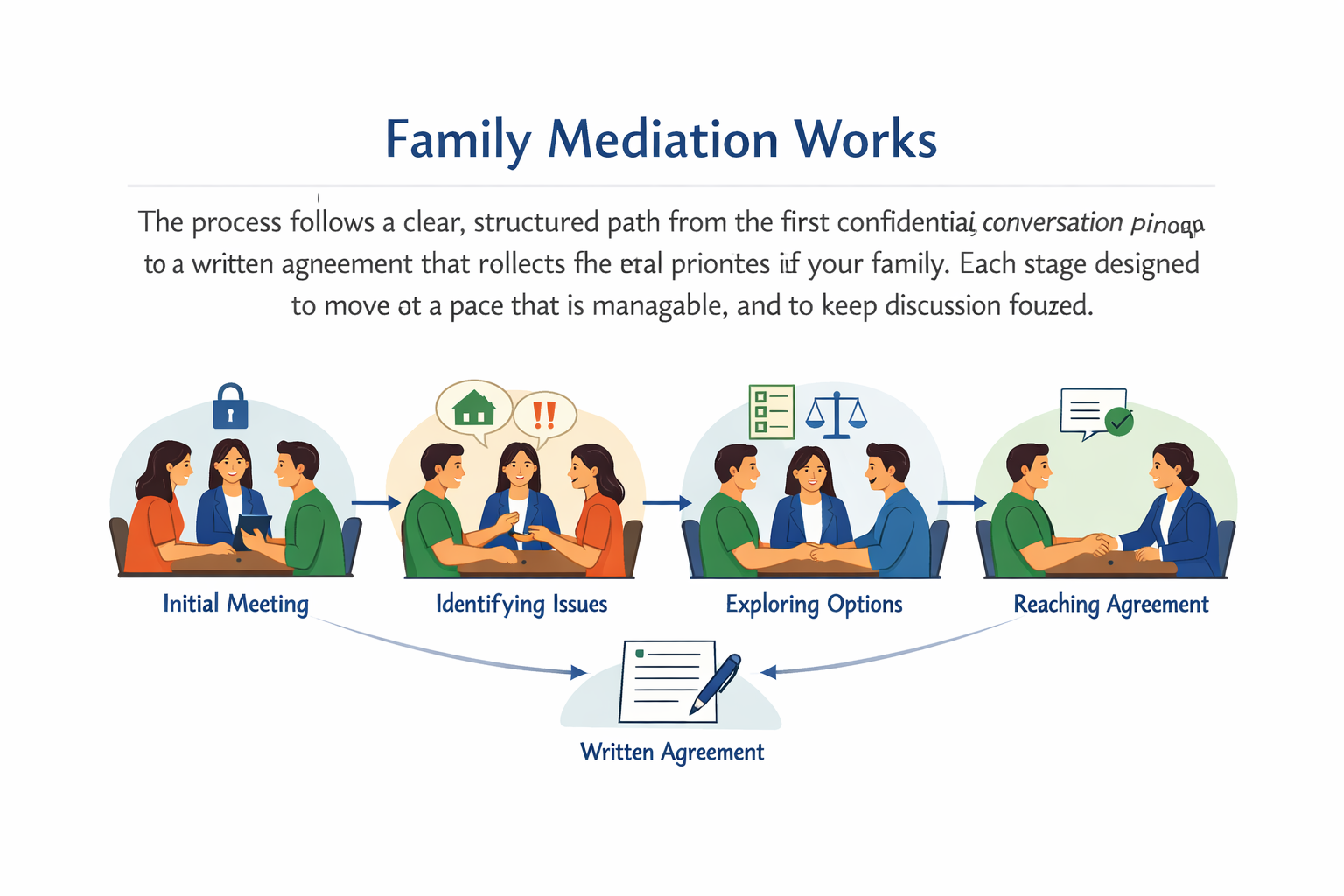
A clear, structured framework ensures every session remains focused, safe, and productive — while remaining flexible enough to respond to the unique needs of each situation.
A confidential conversation to identify priorities, risks, and the scope of issues to be addressed.
Each person's perspective is heard fully and privately, allowing concerns and priorities to be fully understood before joint discussions begin.
Participants come together in a controlled environment to exchange views, test proposals, and negotiate practical outcomes.
Shared understandings are captured in clear written form — practical, neutral, and designed to reduce ambiguity in everyday life.
Built-in review provisions acknowledge that life changes, ensuring agreements remain relevant and adaptable over time.
Mediation is suitable for individuals, families, colleagues, and community members who are willing to engage in a voluntary and constructive process to resolve a shared dispute.
It is appropriate for those who wish to retain control over decisions that directly affect their lives, rather than handing that responsibility entirely to courts or formal institutions. Where one person is uncertain but open to exploring options privately first, individual meetings provide a way to clarify concerns before joint sessions are considered.
Mediation is equally well-suited to situations where communication has broken down and direct discussion has become difficult. The structure of the process is designed precisely to address this — creating conditions in which difficult topics can be raised safely and constructively.
"The people most affected by a dispute are often best placed to shape its resolution."Barker Mediation
Barker Mediation provides structured, professional support across family, workplace, and community settings throughout the UK.
Separation and divorce are deeply personal transitions. Family mediation supports the negotiation of arrangements for children, household division, and daily practicalities in ways that keep control with those most directly affected.
Discussions address living arrangements, time-sharing, education, parental responsibilities, and transitions such as school changes or moves — always with sensitivity to stability, attachment, and developmental needs.
A practical record of mutually agreed arrangements for children: day-to-day routines, holiday schedules, decision-making responsibilities, and built-in mechanisms for revisiting arrangements as circumstances change.
Financial issues in separation are approached with the same calm practicality as child arrangements — identifying immediate needs, differentiating ongoing from one-off commitments, and reaching a fair distribution of responsibilities.
Separation touches every part of daily life. Mediation supports transitions with an emphasis on dignity and practical clarity — covering household practicalities, shared property, and transitional arrangements that reduce immediate stress.
When tensions at work threaten wellbeing and productivity, a neutral structured conversation can restore constructive working relationships — identifying underlying causes of conflict and defining workable steps forward.
Disputes between neighbours, community groups, or local organisations benefit from a mediation style that emphasises repair and sustainability — co-developing agreements that enable communities to function again with mutual respect.
Each mediation is tailored to the situation. The process combines a reliable framework with the flexibility needed to address complex, emotionally charged circumstances with care.
The process begins with a private, no-obligation conversation to establish the scope of the issues, explain the voluntary and confidential nature of mediation, and set expectations around impartiality and structure.
Individual meetings provide space for each person to share their perspective fully and privately. This allows the mediator to understand underlying needs and concerns before joint discussions begin.
With ground rules established, joint sessions bring participants together to exchange views, explore options, and work toward practical agreements. The mediator facilitates throughout, ensuring the conversation remains respectful and productive.
Agreements are drafted in clear, plain language and structured to reduce ambiguity in everyday life. They can range from concise parenting plans to detailed records of financial and household arrangements.
The time required varies with the complexity of the issues involved. Some matters are resolved in a small number of focused sessions; others may take longer. The emphasis is always on decisions that are thorough rather than rushed.
Life changes. Children grow. Circumstances shift. Agreements commonly include provisions for review, ensuring that the arrangements made continue to reflect everyday realities as they evolve.
Mediation is not about winning an argument. It is about reaching genuine understanding and creating arrangements that people can live with in practice.
of mediated family cases reach a full or partial agreement, avoiding the need for contested court proceedings
faster on average than the typical family court timeline, reducing the emotional and financial cost of prolonged dispute
voluntary participation — ensuring all outcomes reflect the genuine, mutual choices of those most affected
rooted practice across family, workplace, and community settings, grounded in established professional and ethical standards
Statistics are indicative and based on published UK mediation sector data. Individual outcomes vary according to the nature and complexity of each case.
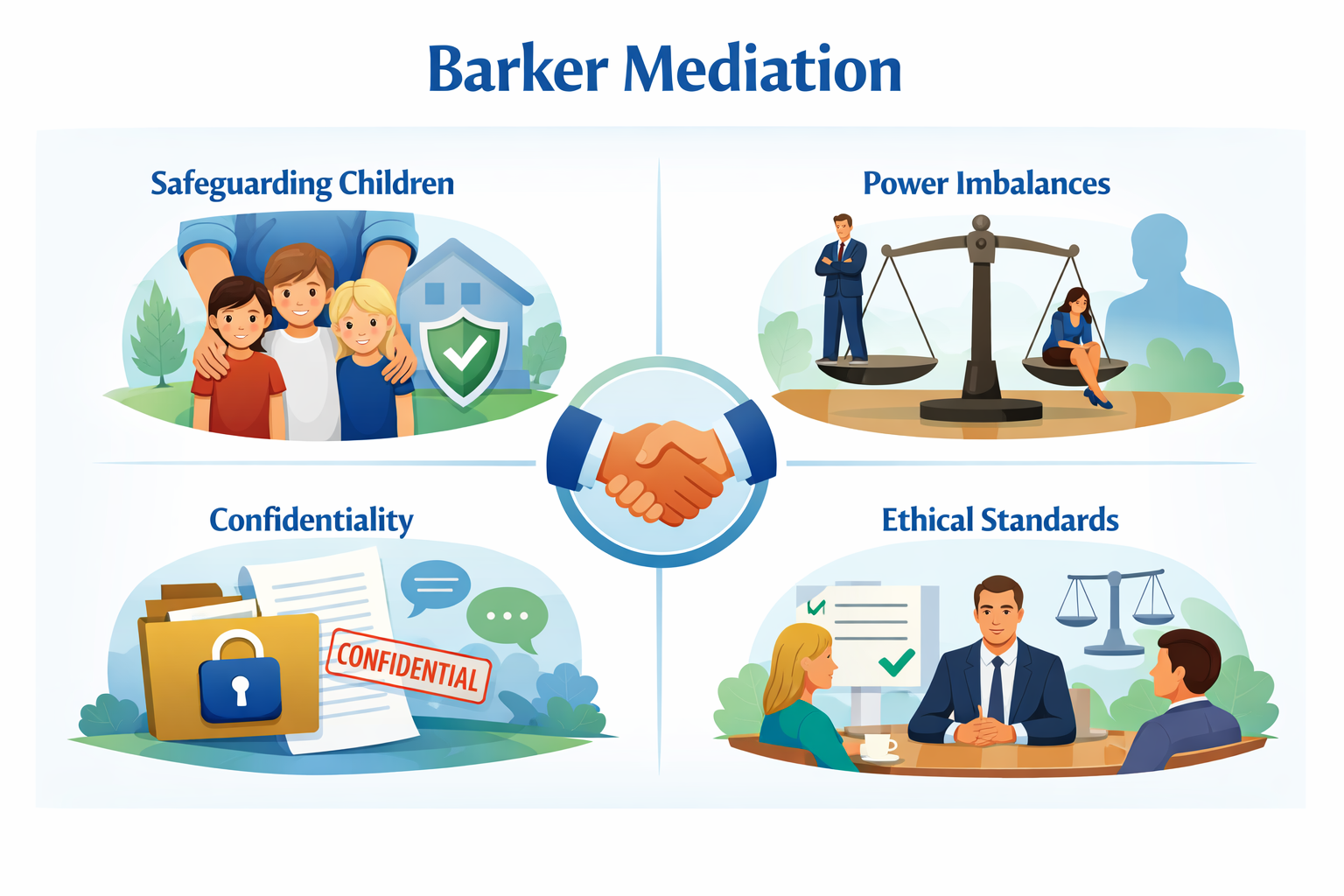
Barker Mediation operates according to recognised professional and ethical standards. Safety and welfare are paramount at every stage of the process.
Safeguarding responsibilities are handled with seriousness and sensitivity. Where children are involved, the focus is firmly on protecting their welfare, preserving stability, and ensuring arrangements support healthy development.
Particular care is taken to identify and address any imbalance of power within the process. The mediator assesses suitability carefully and may recommend separate pathways or additional safeguards where concerns exist.
Discussions and disclosures made during mediation are generally protected from use in other proceedings, subject to legal exceptions such as safeguarding concerns or imminent risk of harm that require reporting.
The practice adheres to established ethical guidelines and recognised professional standards. Impartiality is maintained at every stage, and the mediator's role is strictly limited to facilitating fair, balanced conversation.
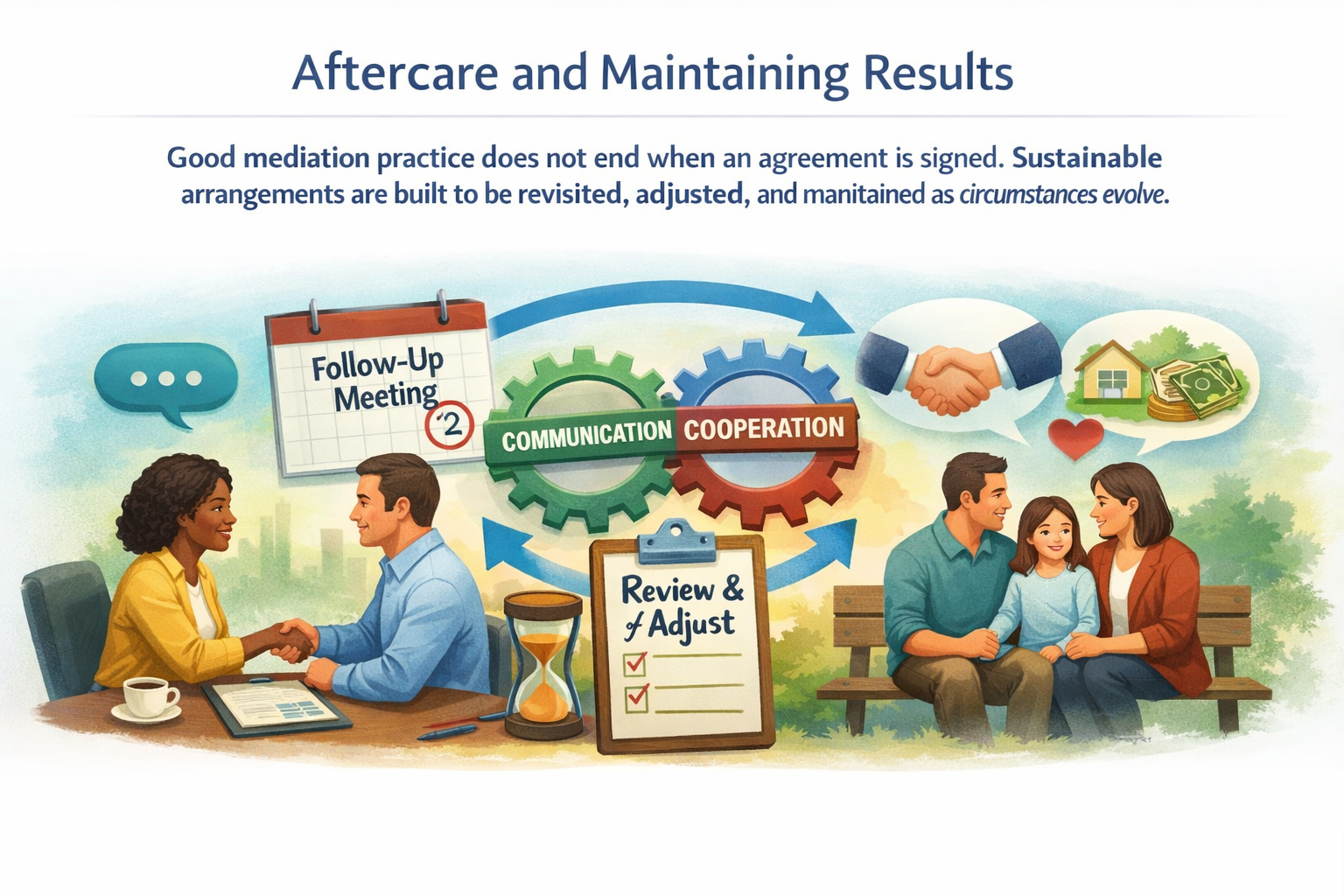
Good mediation practice does not end when an agreement is signed. Sustainable arrangements are built to be revisited, adjusted, and maintained as circumstances evolve.
Agreements routinely include scheduled opportunities to review arrangements, ensuring they remain appropriate as children grow and life circumstances change.
Where new circumstances arise — changes in housing, employment, or parental relationships — the existing process provides a low-friction route to revisit and adjust what has been agreed.
Mediation helps establish the practical habits that underpin effective co-parenting: agreed methods for decision-making, predictable ways of handling unexpected events, and mutual respect for each other's role.
Mediated agreements can be converted into legally enforceable documents with appropriate professional steps. The mediation record provides a strong framework that legal advisers can reference when formal action is required.
Agreements are written to last — and to be revisited if circumstances require. The aim is documents that guide daily life, reduce friction, and remain accessible to review. Short-term concessions that breed resentment are avoided in favour of arrangements that acknowledge real life and anticipate foreseeable change.
Language and communication patterns are also addressed: agreements may include agreed methods for future discussion, protecting children from unnecessary exposure to adult conflict while keeping information channels open in a manner suited to each child's maturity.
By encouraging calm, structured ongoing dialogue, mediation lays the groundwork for improved day-to-day relationships long after the sessions themselves have ended.
Agreements reached in mediation are not automatically legally binding in the same way as a court order. However, they are commonly recorded in clear written form and can be converted into legally enforceable documents with appropriate professional steps where necessary. The practical value of a mediated agreement lies in the clarity it gives to everyday arrangements and in the mutual commitment of the parties who shaped it.
Participation in mediation is voluntary and requires the consent of those taking part. Where one person is uncertain but willing to explore options privately first, individual meetings offer a way to clarify concerns before joint sessions are considered. The voluntary nature of the process helps ensure that any outcome reflects genuine mutual agreement.
Difficult communication is precisely the situation mediation is designed to address. The mediator structures conversations to reduce escalation and to protect the safety and dignity of everyone involved. Individual meetings can accommodate those who prefer to share concerns privately first, and joint sessions only proceed when a safe, structured framework is in place. The mediator also attends carefully to any power imbalances throughout.
The time required varies with the complexity of the issues and the readiness of the parties to make practical choices. Some matters can be resolved in a small number of focused sessions, while others — particularly those involving detailed financial arrangements or complicated family structures — may take longer. The emphasis is always on decisions that are thorough rather than rushed, with a clear structure for review where needed.
Confidentiality is a core principle of mediation. Conversations and any disclosures made during the process are generally protected from being disclosed in other proceedings, subject to legal exceptions such as safeguarding concerns or imminent risk of harm. This protection enables honest and open discussion without the concern that sensitive details will be used against a party in public proceedings.
Mediation can run alongside legal processes in many cases. Participation does not automatically stop legal action, and the choice to pursue or maintain legal steps remains with the individuals involved. Mediation often provides practical resolutions that reduce the need for continued legal contest — but decisions about legal strategy rest with the individuals receiving independent legal advice.
The mediator facilitates — they do not decide on behalf of the parties. Their role is to help clarify issues, explore options, and support the drafting of practical agreements. This neutral facilitation preserves the decision-making authority of the people most affected by the outcome, ensuring that all agreements are genuinely co-created.
Yes. Good mediation practice recognises that life changes and that arrangements may need revisiting. Agreements commonly include review points or simple mechanisms to reconvene and adjust terms as circumstances evolve. Built-in review provisions help make agreements resilient and responsive to future needs — including changes in housing, employment, or a child's developmental requirements.
The process gave us both a way to talk when we genuinely couldn't. By the end, we had a parenting plan we both understood and could actually work with day to day.
I didn't expect to feel heard. But the structure of the sessions meant I had real space to say what mattered to me, without things escalating into another argument.
What struck me was how calm and organised it all was. Complex financial and property questions that had seemed impossible were worked through systematically and written down clearly.
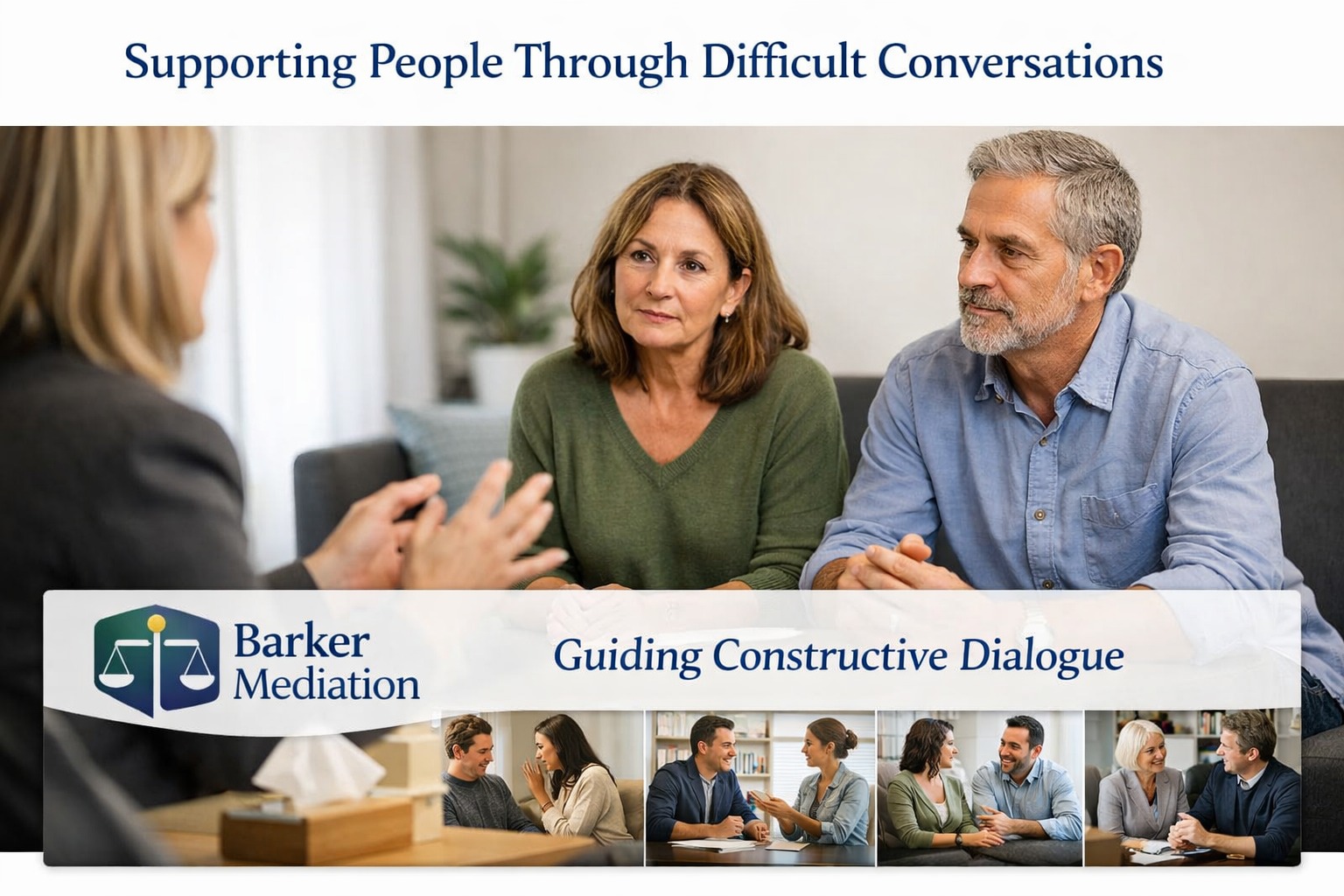
No two disputes are identical. Each situation requires careful listening, measured guidance, and a focus on realistic outcomes that the people involved can genuinely live with.
The mediator's approach is steady, measured, and human. Rather than dramatic promises or rigid formulas, clients encounter empathy, structure, and clarity a practical toolkit built from broad experience across family, workplace, and community disputes.
Particular care is applied to complex family situations: blended families, varied caregiving arrangements, and cases with an international dimension require sensitivity to both emotional depth and practical detail. The focus remains, always, on the everyday realities that underpin family life daily routines, schooling, holidays, and the simple logistics that matter most to children and parents alike.
Language in every session is direct, calm, and free of judgement. The aim is not simply to reach agreement, but to restore the capacity for respectful interaction so that daily life is genuinely less stressful long after the sessions have ended.
Neutrality is the foundation of everything. Each person's voice is heard equally, information is clarified without bias, and choices are explored without coercion or pressure.
A clear framework that keeps discussions productive while allowing space for emotions to be acknowledged and integrated into practical planning.
The emphasis is always on solutions that last — clear, practical arrangements that anticipate foreseeable change.
Barker Mediation approaches every situation with sensitivity to the complexities of human relationships. When people are given the space to speak honestly and the structure to listen carefully, they are capable of reaching balanced agreements that protect what matters most to them.
Through steady facilitation and thoughtful dialogue, mediation lays the groundwork for improved day-to-day relationships. It enables families, colleagues, and communities to step beyond conflict and toward clearer communication, defined responsibilities, and a more stable future built on cooperation rather than confrontation.
Practical, neutral, and quietly supportive — helping people find forward paths they can live with.